
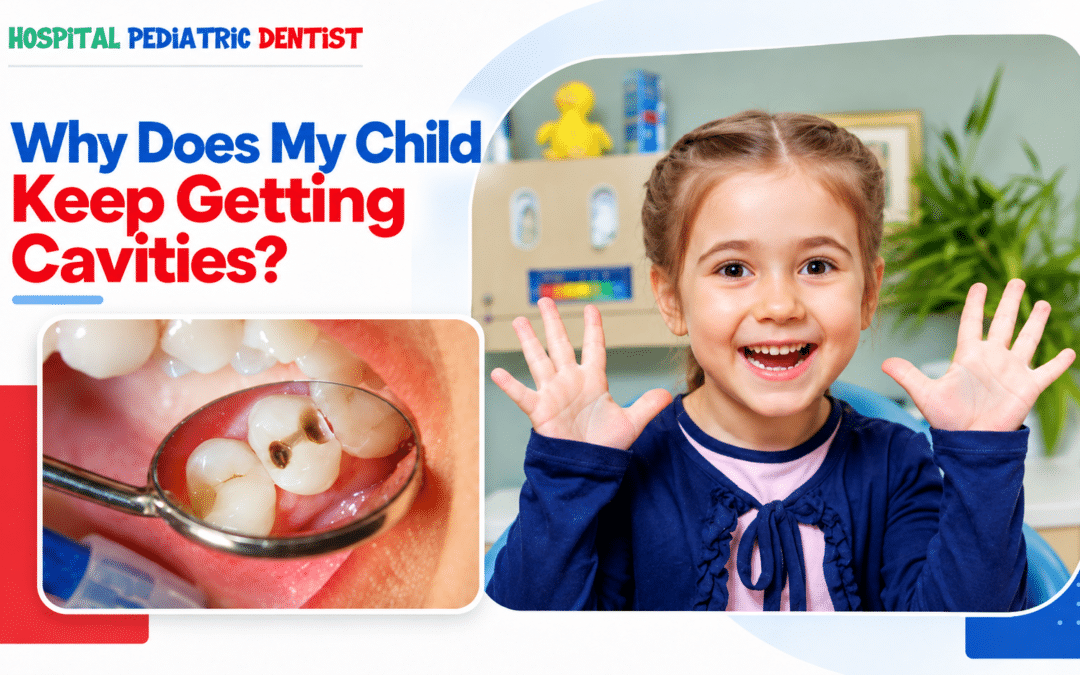
Children can keep getting cavities even when they brush every day. Tooth decay develops when bacteria in dental plaque use sugars and starches to produce acids that remove minerals from enamel, the hard outer layer of teeth. Frequent snacks, missed plaque, low fluoride exposure, and the shape of a child’s teeth can all increase the risk.
Repeated cavities do not always mean a child brushes poorly. The cause may involve several everyday habits or tooth-related factors that parents cannot easily identify at home.
Hospital Pediatric Dentist evaluates these factors together to understand why new cavities appear and which preventive steps fit each child.
What Causes Repeated Cavities in Children?
Repeated cavities develop when acid damage happens faster than teeth can replace lost minerals. Seven common factors can shift that balance.
1. Frequent Snacking Throughout the Day
Each snack containing sugar or starch gives plaque bacteria another chance to make acid. Crackers, cookies, chips, and fruit snacks can contribute, especially when a child grazes throughout the day.
Frequent eating leaves less time between acid exposures for saliva to neutralize acids.
A child who eats small snacks throughout the afternoon may expose their teeth to sugar and starch more frequently than a child who eats the same foods during a regular meal.
2. Sugary Drinks and Bedtime Feeding
Repeated sipping of juice, soda, or sweetened milk exposes teeth to sugar over an extended period. Milk, formula, or juice left on the teeth after bedtime feeding can increase decay risk.
Saliva flow decreases during sleep, making it harder to clear acids and food residue. Choose water between meals and avoid putting a child to bed with a bottle of milk or juice.
Drinking habits matter as much as drink choices. Carrying a sippy cup of juice throughout the day repeatedly exposes teeth to sugar, even when each individual sip is small.
3. Brushing That Misses Certain Teeth
Children may brush daily but miss plaque near the gumline, on back molars, or around crowded teeth. A toothbrush cannot fully clean between touching teeth.
Adults should assist with brushing until the child can clean all surfaces reliably and floss between touching teeth.
Watch your child brush occasionally rather than relying only on their description of the routine. Check whether the toothbrush reaches the back teeth and whether the child cleans the inner surfaces.
4. Not Enough Fluoride Protection
Fluoride makes enamel more resistant to acid and supports the return of minerals to weakened areas.
Brushing without fluoride toothpaste removes plaque but misses this protective benefit. A pediatric dentist may recommend professional fluoride treatment for children at greater cavity risk.
Fluoride exposure comes from sources such as toothpaste, drinking water, and professional applications. A dentist can review these sources before deciding whether a child needs additional fluoride protection.
5. Deep Grooves in Back Teeth
Molars have pits and grooves that can hold plaque even after careful brushing. Their narrow shape makes these areas difficult to clean.
Dental sealants cover selected chewing grooves with a protective barrier when a dentist finds them appropriate.
These grooves differ in depth and shape between children. A pediatric dentist examines the chewing surfaces and the child’s cavity history before deciding whether sealants are suitable.
6. Weak or Poorly Developed Tooth Enamel
Some children have developmental enamel defects, including enamel hypoplasia, which can leave areas of enamel thinner or incompletely formed.
Those surfaces may be more vulnerable to decay. Enamel problems are not always inherited, and a dental examination is needed to identify them.
Enamel defects may appear as changes in tooth color, surface texture, or shape. A dentist distinguishes these developmental changes from early tooth decay before recommending preventive care or restoration.
7. Dry Mouth and Reduced Saliva
Saliva washes away food particles, neutralizes acids, and supplies minerals that protect enamel.
Mouth breathing, medications, and certain health conditions can cause dryness. Persistent dry mouth deserves evaluation rather than assuming the child simply needs to brush harder.
Parents may notice that their child frequently wakes with a dry mouth or complains of thirst. These observations are worth discussing during a dental examination, especially when cavities keep returning.
Why Does My Child Get Cavities Even With Regular Brushing?
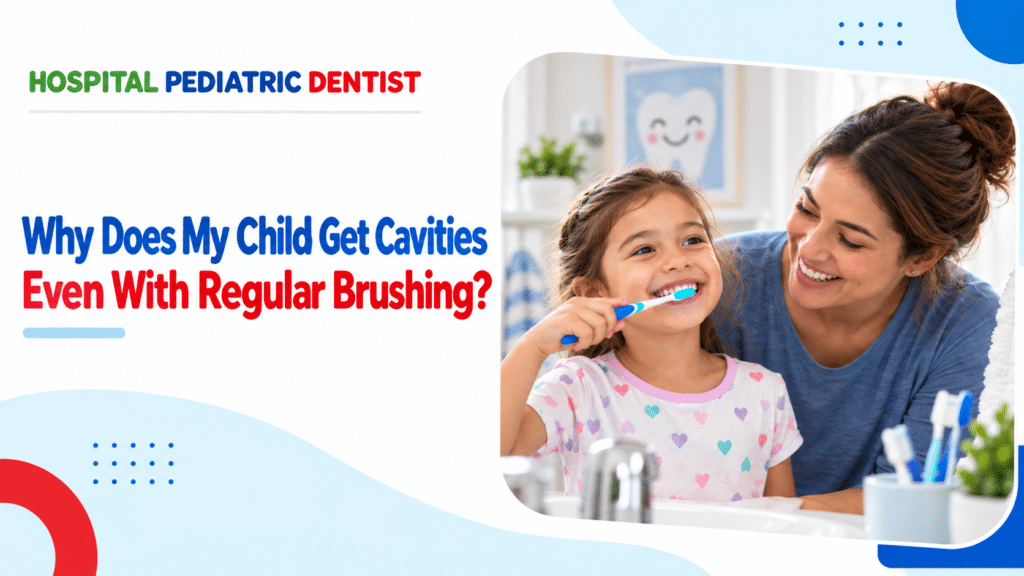
Brushing removes plaque from reachable surfaces, but it does not eliminate every cavity risk. A child may brush for two minutes yet leave plaque between tightly touching teeth. Frequent juice or snack breaks can then expose those areas to acid repeatedly.
Check technique as well as routine: watch whether your child reaches the back teeth, cleans along the gumline, and uses fluoride toothpaste.
The American Dental Association recommends a rice-grain-sized smear of fluoride toothpaste for children younger than 3 and a pea-sized amount from ages 3 through 6. Parents should supervise use to limit swallowing.
Brushing twice daily remains essential, but cavity prevention also depends on eating habits, fluoride exposure, and cleaning between teeth. A pediatric dentist can identify which risk factors require attention when brushing habits appear consistent.
Can the Location of Cavities Reveal Why They Keep Forming?
The location of tooth decay can give a pediatric dentist clues about plaque and sugar exposure, but location alone cannot identify the exact cause.
- Between teeth: Plaque can remain on surfaces a toothbrush cannot reach.
- Back molars: Deep chewing grooves can trap plaque and food.
- Upper front baby teeth: Frequent feeding or sugary drink exposure may contribute.
- Near the gumline: Plaque may remain where brushing misses the edge of the tooth.
A dentist compares these patterns with the child’s diet, fluoride exposure, brushing habits, and clinical findings before deciding what may be driving new decay.
Cavities on several different surfaces may indicate more than one contributing factor. The dentist may also use dental X-rays when needed to detect decay between teeth that cannot be seen during a visual examination.
How Can Parents Prevent Their Child From Getting More Cavities?
Parents can reduce cavity risk by limiting frequent sugar exposure, removing plaque thoroughly, and protecting enamel with fluoride.
- Brush twice daily using fluoride toothpaste in the amount recommended for your child’s age.
- Floss daily where neighboring teeth touch, with adult assistance when needed.
- Limit constant grazing on crackers, candy, chips, or other sugary and starchy snacks.
- Choose plain water between meals and after the final nighttime brushing.
- Ask whether fluoride treatment for children is appropriate when additional enamel protection is needed.
- Ask whether dental sealants for kids are suitable for hard-to-clean molar grooves.
Schedule dental visits according to your child’s cavity risk instead of assuming that every child needs the same interval.
Focus on habits your family can maintain consistently. Replacing frequent sweet drinks with water and checking your child’s nighttime brushing can reduce repeated exposure to cavity-causing conditions between dental visits.
Can Early Cavities Be Reversed, or Does My Child Need Treatment?
Early enamel mineral loss may be stopped or reversed before a hole forms. A chalky white spot can be an early sign, although not every white spot is decay. Fluoride and better cleaning may protect noncavitated areas. Once a cavity becomes a hole, lost tooth structure does not grow back.
A dentist may recommend pediatric dental fillings to restore established decay, or another approach when damage is more extensive. An examination determines whether to monitor, protect, or restore an area.
Treatment decisions also depend on whether the affected tooth is a baby tooth or permanent tooth, how deep the decay extends, and whether the child has pain or other symptoms.
When Should Parents See a Pediatric Dentist for Repeated Cavities?
Schedule a pediatric dental examination when new cavities continue to appear, or when you notice white or brown spots, tooth sensitivity, pain, or a visible hole. Seek urgent assessment for facial swelling, fever with suspected dental infection, or severe dental pain.
At Hospital Pediatric Dentist, an evaluation may include checking tooth surfaces, reviewing snacks and fluoride use, and taking dental X-rays when indicated. The American Academy of Pediatric Dentistry describes risk-based care that links these findings with prevention and treatment choices.
A cavity-risk assessment considers previous decay along with current findings. This allows the dentist to recommend preventive steps based on the child’s actual risks instead of using the same plan for every patient.
Request a Pediatric Dental Evaluation
Repeated cavities deserve a clear explanation rather than another guess about brushing. Hospital Pediatric Dentist in Houston, TX can evaluate your child’s risk factors and discuss suitable preventive or restorative options.
A dental examination can identify existing decay and determine whether changes to home care or professional preventive treatment are appropriate. Request an appointment to identify the next appropriate step.