
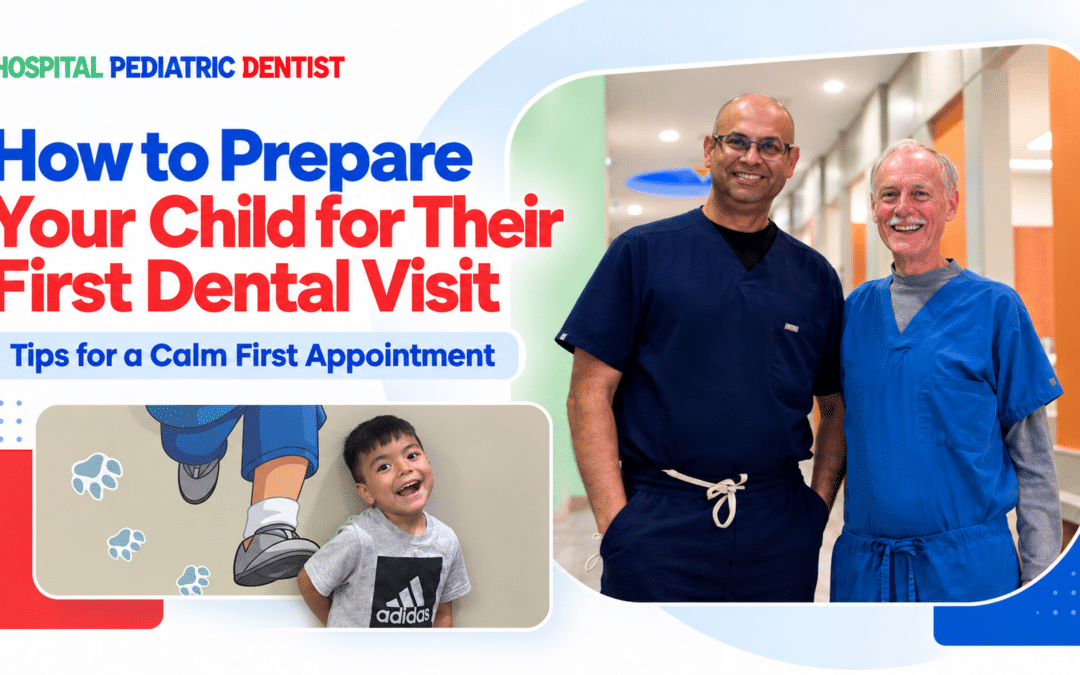
Preparing your child for their first dental visit starts with a few simple steps: explain what the dentist may do, practice a pretend checkup at home, and plan the appointment around your child’s usual routine. Bring the health information the dental team needs, along with any questions you have.
A little preparation can make unfamiliar people and equipment easier to understand. Your child may still be nervous, and that’s okay.
What Should You Tell Your Child Before the First Dentist Visit?
Tell your child that the dentist will look at their teeth and check how their mouth is growing. Use words they already understand.
For a preschooler, you might say, “We’re going to meet the dentist. They’ll use a little mirror to look at your teeth and may count them. I’ll be close by.”
Keep the explanation honest. A first visit often includes an examination and advice about tooth development. Don’t describe procedures that haven’t been planned.
Avoid telling your child, “Nothing will hurt,” or using the dentist as a warning when they refuse to brush. If they ask a difficult question, answer simply and let the dental team explain what will happen.
Some children need only a brief explanation a day or two beforehand. Others need more time to ask questions.
How Can You Practice a Dental Visit at Home?
Play a short game in which you and your child take turns being the dentist. A stuffed animal, a soft toothbrush, and a small mirror are enough.
Start by pretending to count the toy’s teeth. Then invite your child to open wide and say “ahh” while you look at their smile. Let them count your teeth, too, if you’re both comfortable.
You can practice a simple sequence: sit down, open your mouth, let someone look, and finish. Keep it light. Stop if your child becomes upset; practicing should never mean holding their mouth open.
A picture book or video can introduce the dental chair, exam light, and mirror. Preview it first to check that the message is suitable.
How Should You Prepare a Baby, Toddler, or Older Child?
Preparation depends on your child’s age and response to unfamiliar places.
Babies and Young Toddlers
For babies, preparation is mostly about the parent. Have feeding and sleep routines in mind, gather health details, and bring a familiar comfort item.
A toddler may understand a few words, and you can practice opening wide during a normal brushing routine.
Young children sometimes sit on a parent’s lap during an oral examination. Ask the dental office what to expect instead of promising your child a certain type of chair or exam.
Preschoolers and Older Children
Preschoolers may enjoy pretending to be the dentist, reading a story, or seeing pictures of dental tools. Older children often want to know why they’re going and what the dentist will check.
Answer their questions without guessing about treatment. The aim is understanding, not perfect behavior.
When Is the Best Time to Schedule Your Child’s First Dentist Appointment?
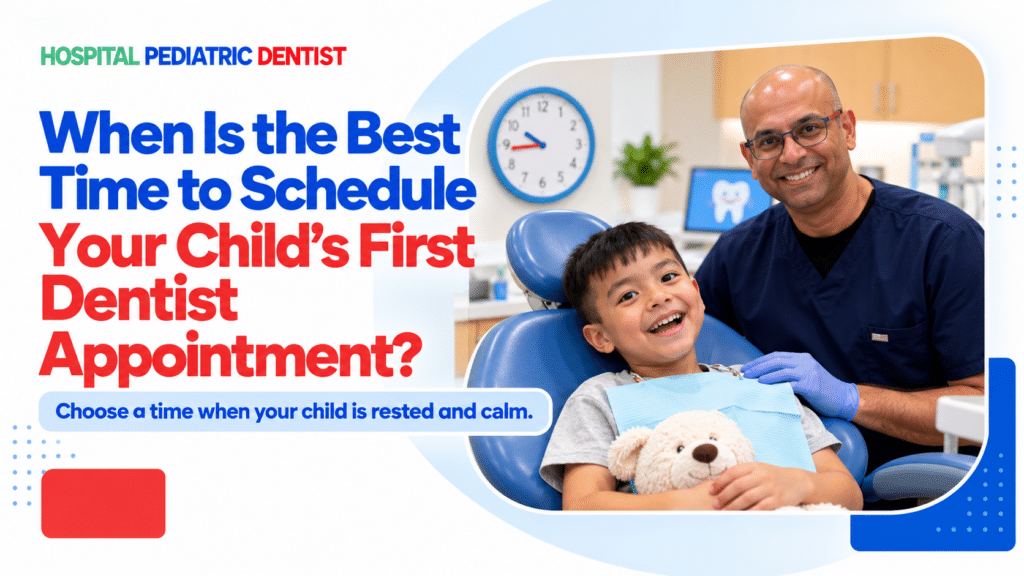
Choose a time when your child is usually rested, alert, and not hungry. For some children, that’s the morning. For others, a different time outside their usual nap works better.
The American Academy of Pediatric Dentistry recommends a first dental examination when the first tooth appears and no later than the first birthday. If your child is older and hasn’t visited a dentist yet, arrange an appointment rather than waiting for all the baby teeth to come in.
For details about the examination itself, see Your Child’s First Dental Visit in Houston, TX.
What Should Parents Bring to the First Dental Appointment?
Bring your child’s medical and dental information, a list of medicines and allergies, and any forms the office asks you to complete. Mention previous dental injuries or health concerns that could affect an examination.
Write down questions before leaving home. You might want to ask about brushing struggles, teething, pacifier use, thumb-sucking, or an unusual mark on a tooth. A short note on your phone works fine.
Bring a favorite stuffed animal or quiet book. Ask whether your child can keep it nearby during the exam.
Before visiting Hospital Pediatric Dentist, review the Patient Information resources and ask which forms or records are needed for your child’s appointment.
What If Your Child Cries or Refuses to Open Their Mouth?
Crying or refusing to open their mouth does not automatically mean a first dental visit has failed. A toddler might be comfortable at home but upset by a new room, unfamiliar people, or someone looking inside their mouth.
Tell the dental team ahead of time if your child strongly resists brushing, has had a difficult medical visit, or struggles with people touching their face. Those details can guide how the dentist approaches the examination.
Tell the team what comforts your child. Don’t scold them for crying.
The pediatric dentist will decide what can be checked safely and what may need another approach or a follow-up visit. Even a partial examination and a discussion of home care can be useful.
How Can You Prepare a Child With Sensory or Special Healthcare Needs?
Tell the dental office about your child’s needs before the first appointment. Details about communication, medical conditions, movement, and sensory triggers can be as useful as a diagnosis.
For example, explain whether bright lights are difficult, certain sounds cause distress, or unfamiliar touch is hard to tolerate. Mention whether short instructions, extra processing time, or a visual schedule have worked before.
HPD evaluates children with special healthcare needs. The dental team considers each child’s health, development, and ability to cooperate when planning care.
Ask what arrangements may be possible before the visit. Do not assume a particular accommodation, sedation method, or care setting will be needed or available without an individual evaluation.
What Should You Do on the Day of the Dental Visit?
Keep the morning or afternoon as close to your child’s normal routine as possible. Give them a meal at a suitable time, brush their teeth, and follow any instructions the office sent before the appointment.
Allow time for travel and check-in. Tell your child: “We’ll go inside, meet the team, and let the dentist look at your teeth.”
You don’t need to promise a reward or a tear-free appointment. Be present, answer the dental team’s questions, and let the dentist guide the examination.
First Dental Visit Checklist for Parents
Before leaving home, check that you’ve:
- Explained the visit using simple, honest words.
- Tried a short pretend checkup, if your child enjoys it.
- Chosen a time that avoids usual naps or meals.
- Prepared medical information, forms, and questions.
- Packed a familiar toy, blanket, or quiet book.
- Shared any anxiety, sensory, or communication concerns with the office.
- Allowed time for travel and check-in.
Prepare for Your Child’s First Dental Visit in Houston
Hospital Pediatric Dentist evaluates infants, children, and teens in Houston, including children with special healthcare needs. The office is at 17440 FM 529, Suite 102, Houston, TX 77095.
Request your child’s first dental evaluation to discuss their dental history, any concerns about the visit, and the next step for their care.
Frequently Asked Questions
Q. Should I Cancel If My Child Is Nervous?
Not simply because your child is nervous. Tell the dental office about their worries and ask how to prepare. If your child is ill or unable to attend, contact the office about rescheduling rather than deciding based on anxiety alone.
Q. What If My Child Is Older Than One and Has Never Seen a Dentist?
Schedule a first dental evaluation now. The age-one recommendation is a starting point, not a reason to avoid care later. The dentist can review your child’s oral development, dental history, and current needs.
Q. Can I Stay With My Child During the First Visit?
Hospital Pediatric Dentist encourages parents to accompany their child during the first-visit examination. Your presence allows you to share relevant history, ask questions, and remain a familiar person while the dentist evaluates your child.
Q. Can My Child Eat Before Their First Dental Appointment?
Yes, children can usually eat before a routine dental checkup. Give your child a normal meal so they aren’t hungry during the visit. Brush their teeth afterward when possible, and follow any special instructions from the dental office.
Q. Is a First Dental Visit Useful If My Toddler Hates Toothbrushing?
Yes, a first dental visit is still useful when a toddler resists brushing. The pediatric dentist can examine the teeth as cooperation allows and guide parents on brushing difficulties. Tell the dental team about your child’s behavior before the appointment.